Flawless trends
How can you identify the dress code when none is specified? How do you choose an outfit for the venue, time, and nature of the event?
The invitation gives the venue, time, and nature of the event, but no information about what to wear. In this situation, the biggest challenge usually isn't choosing a particular dress or pair of trousers, but figuring out the level of formality. Your outfit should suit the event without looking too casual or overly dressy.
If no dress code is specified, it's best to determine the level of formality based on five cues: the type of event, the venue, the start time, the nature of the host, and the wording of the invitation. The more formal the venue, the later the event, the more formal the host, and the more celebratory the occasion, the dressier your outfit should be. If the cues are unclear, the safest choice is an outfit one level dressier than everyday wear, but without elements typically worn to very formal events.
That doesn't mean you should wear a cocktail dress or suit to every event with no specified dress code. The key is to consider several details together and use them to determine the likely level of formality.
Why doesn't the absence of a dress code mean you can wear anything?
An invitation that doesn't specify a dress code often means the organizer assumes you understand the context of the event. A business dinner in a hotel restaurant, an afternoon company anniversary celebration, and a family gathering in a garden may not have a stated dress code, but each suggests a different way to dress.
So the first question should not be “Dress or trousers?” but “How formal is the event?”
Only once you have established the level of formality can you choose the cut, fabric, color, and accessories.
If you first want to get a better sense of the different levels of formality, use the guide Women's Dress Codes: What Are the Different Types and What Should You Wear? as a reference point.
What clues can help you identify the dress code when it isn’t specified?
The most important clues are not individual words, but the combination of them.
It matters whether the event is corporate, family, business, or social. The venue, start time, whether there is an official program, the type of establishment, the organizer’s character, and any additional information in the invitation are all important.
For example, dinner at 19:00 organized by a company’s management suggests a higher level of formality than an afternoon team get-together at a casual restaurant.
The same restaurant doesn’t always mean the same dress code, either. The whole context matters.
How does the type of event affect how formal your outfit should be?
The type of event is the first filter.
A business meeting usually calls for a more polished outfit than a private get-together with friends. A banquet is more formal than an ordinary company dinner. A company anniversary celebration may call for a different outfit than a team-building event.
However, don’t assume that all business events have the same level of formality.
A client meeting at 10:00 may call for classic business attire, while an evening networking event allows for a more elegant look.
If the occasion has a clearly business-oriented feel, this guide may also help: What to Wear to a Business Meeting.
How does the venue help you determine the dress code?
The venue often serves as a hidden clue about what to wear.
A five-star hotel, elegant restaurant, ballroom, or theater usually raises the level of formality. A hotel restaurant suggests something different from an outdoor restaurant patio, just as a conference room suggests something different from a club.
That doesn’t mean the venue automatically dictates a specific dress code.
It’s best to treat the venue as one of several clues. An elegant location + an evening start time + an official event is a strong combination suggesting more formal attire.
Does the time of day matter?
Yes. The later an event starts, the more often you can opt for a more evening-appropriate look.
A meeting at 12:00 usually calls for a lighter, more daytime-appropriate outfit. An event starting at 18:00 or 19:00 may warrant darker colors, more elegant fabrics, and more striking accessories.
The time alone, however, isn’t enough to determine the dress code.
A team dinner at a casual restaurant at 19:00 may still be less formal than an afternoon awards ceremony in an official venue.
What does an elegant restaurant mean when no dress code is specified?
It’s usually best to aim for something between smart casual and semi-formal, depending on the nature of the event.
For a business event, a safe choice could be elegant trousers, a top or shirt, and a blazer. If the event is more celebratory, you could choose a midi dress or a more formal suit.
When in doubt, it’s best to avoid both very casual pieces and an outfit that looks like it belongs at a gala.
How should you interpret a hotel as an event venue?
The word “hotel” alone doesn’t mean a high level of formality. The type of space matters.
A gathering in a hotel restaurant may be elegant but still relatively relaxed. A banquet in the ballroom of the same hotel may call for a much more formal outfit.
If the invitation includes words such as “gala,” “formal dinner,” “banquet,” “awards ceremony,” or “anniversary celebration,” the level of formality goes up.
For a more celebratory event, the guide What to Wear to a Banquet is a good reference point.
How does the company’s character affect what you wear?
The industry and workplace culture can change the recommendation, even when the type of event is identical.
A law firm, bank, public institution, or large corporation may have more conservative expectations than a creative agency, tech company, or fashion brand.
If the company has a formal dress code day to day, a corporate event usually won’t lower the level of formality completely. If employees dress casually every day, a company event may require only a modest step up in formality.
For a setting with less formal expectations, Women's Business Casual can serve as a reference point.
How can you gauge the level of formality from the invitation itself?
The way the invitation is written can also offer clues.
Formal wording, full names, a detailed schedule, information about an official program, or mention of a prestigious venue usually point to a higher level of formality.
A short message sent through a messaging app, casual language, and phrases such as “let’s meet after work” suggest a more relaxed occasion.
This isn’t an absolute rule, but the organizer’s communication style can help when the other clues are ambiguous.
What should you do when an event combines two different levels of formality?
This is one of the most common challenges.
Examples include a daytime conference followed by dinner, a corporate event that includes a banquet, or a celebration that starts at the office and ends at a restaurant.
The best approach is to choose a base outfit suitable for the more formal part of the event, while leaving room to change one element.
A good example is elegant trousers, a top, and a blazer. During the day, the outfit can stay more businesslike, while in the evening you can change your jewelry, show more of the top, or switch up your accessories.
A black women's blazer paired with simple trousers can make a versatile foundation.
What should you wear when you don’t know whether the event is smart casual or semi-formal?
In that situation, it’s best to choose pieces that fall between those two levels.
Elegant trousers, a polished top, and a blazer give you more control over the level of formality than a very evening-style dress. A simply cut midi dress can also be a safe choice.
If you get more information and find out the event is less formal, you can easily tone down this outfit with your accessories.
If it turns out to be more elegant, a structured blazer and well-chosen accessories can elevate the whole look.
Semi-formal or cocktail: how can you tell the difference when neither is specified?
Semi-formal is generally a broader level of elegance that can include a midi dress, a women’s suit, or elegant trousers.
Cocktail attire is more often associated with an evening event with a more celebratory feel, where dresses, more elegant fabrics, and accessories play a bigger role.
If the event takes place in the evening, is social in nature, and is being held at an elegant venue, the dress code may lean toward cocktail attire.
If it has a business or official component, semi-formal is more likely.
For a detailed comparison, see the separate guides: Women's Semi-Formal Dress Code and Women's Cocktail Dress Code.
Is a dress always the safer choice when the dress code is unknown?
No.
A dress can be an excellent choice, but its formality depends on its length, fabric, cut, and accessories. A simple midi dress may be more versatile than a very evening-style mini or a floor-length gown.
For a business event, elegant trousers or a suit can be just as good—and sometimes a safer—choice.
A navy midi dress can be a versatile choice, since a dark neutral color is easy to adapt to different levels of formality.
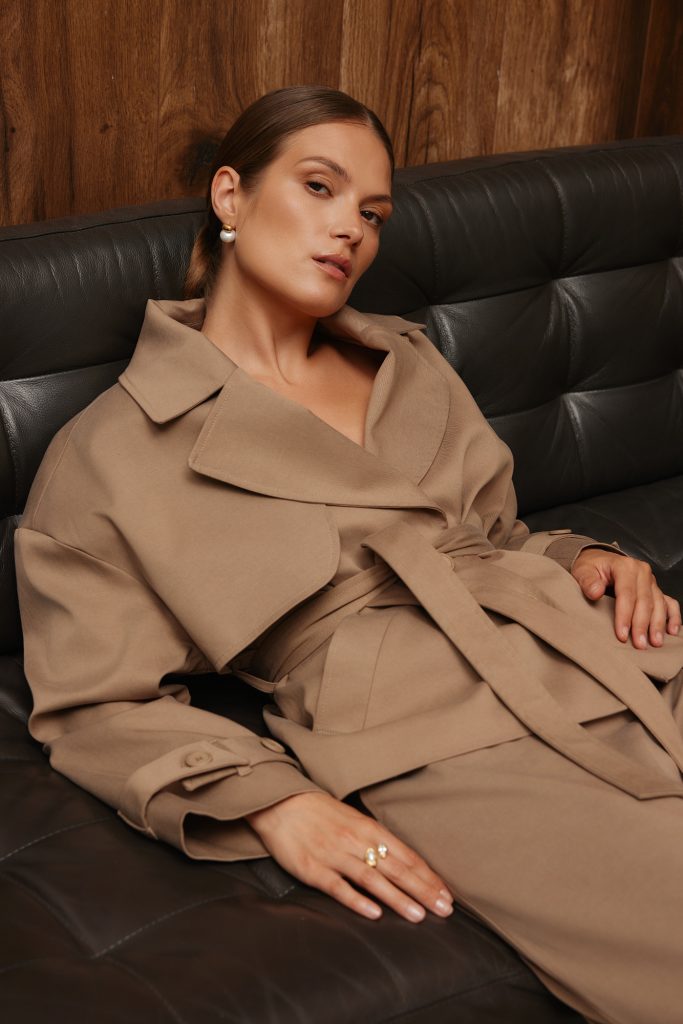
Is a women’s suit a good option when the dress code is unknown?
Yes, especially if the event is business-related, corporate, or official.
A suit is easy to adapt through your choice of top and accessories. With a shirt, it will look more formal; with a simple top, it will feel more modern and less office-like.
The suit’s construction also matters. A very formal style may look too businesslike at a private party, while a softer cut can work well for a semi-formal event.
If the event is work-related, this guide may help: Women's Work Suit: How to Choose the Shoulder and Waist Fit for a Business Dress Code.
Are elegant trousers a safe choice when the dress code is unknown?
In many situations, yes.
Elegant trousers are especially practical when you know the event is more formal than an everyday get-together, but you are not sure whether it calls for eveningwear.
You can pair them with a shirt, an elegant top, a blazer, or a more striking top.
Black dress pants for women can be a good starting point, as the other pieces let you adjust the level of formality.
What should you wear to a business event with no specified dress code?
The safest approach is to start with an outfit that matches the company culture, then move one level up in formality.
If the everyday dress code is business casual, you could wear elegant trousers, a dressier top, and a blazer to a company dinner.
If the everyday dress code is formal, an evening event may call for a suit, an elegant dress, or a more sophisticated trouser outfit.
Don’t automatically assume that an event after work means casual attire.
What should you wear when the company is formal but the event is being held at a relaxed venue?
In that case, it’s worth keeping one professional element while making the rest of the outfit less formal.
That could mean elegant trousers and a top instead of a classic shirt, or a blazer paired with a less formal top.
This way, your outfit respects the company culture without looking as though you simply wore your conference-room clothes unchanged.
What should you wear when the company is creative but the event is being held at an elegant restaurant?
The venue raises the level of formality, but that doesn’t mean you have to give up your personal style.
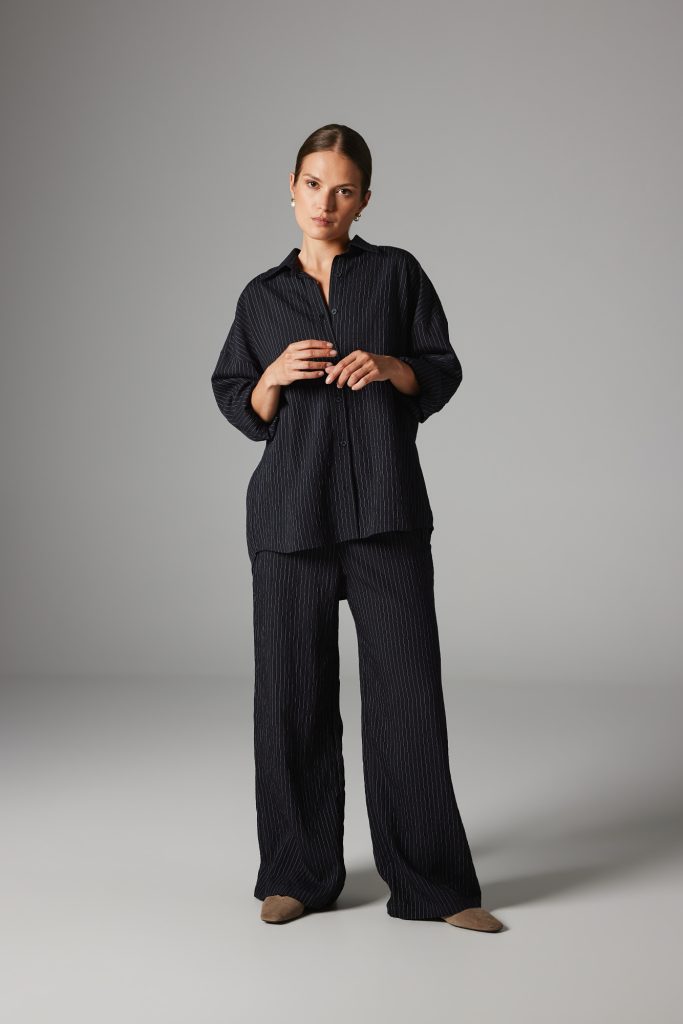
You could choose a more modern suit, wide-leg trousers with an elegant top, or a minimalist dress.
In this situation, the quality of the fabric, the construction, and the overall cohesion may matter more than a conservative outfit.
How should you dress when an event starts with a formal portion and ends with dinner?
It’s best to build your outfit in layers.
You could start with elegant trousers or a dress, with a blazer as the most formal layer. Once the formal portion is over, you can take it off or change your accessories.
That way, you don’t have to prepare two complete outfits.
Can color signal a level of formality?
Color doesn’t determine formality on its own, but it does influence how an outfit comes across.
Black, navy, charcoal, and deep brown often look more formal than very light or vivid colors, especially in the evening.
That doesn’t mean a colorful outfit is automatically less elegant. The fabric, cut, and accessories matter too.
If you want to create a coordinated neutral wardrobe palette, see the guide How to Choose a Base Color for Your Wardrobe.
How does fabric change the formality of an outfit?
The same cut can look completely different depending on the fabric.
A smooth, well-draping fabric usually looks more elegant than soft, sporty knitwear. Matte, structured fabrics can create a professional look, while satin or shine can make an outfit feel more evening-appropriate.
So when assessing a garment, it’s not enough to look at its category. ‘Pants’ can be either casual or very elegant.
What should you do if you’re worried about being overdressed?
If all the signs point to an event that is at least semi-formal, dressing slightly above the expected level is usually safer than being noticeably underdressed.
However, it’s best to avoid pieces clearly associated with the most formal occasions if there’s no reason to expect that level of dress.
Instead of a very formal evening gown, choose a midi dress, a suit, or elegant trousers and a blazer.
What should you do if you’re worried about being too casually dressed?
The easiest way to make an outfit more formal is with three elements: a polished outer layer, a dressier top, and a more subdued color palette.
If you’re unsure, a shirt or simple elegant top can replace a T-shirt, and a blazer can replace a soft cardigan.
You don’t always need to replace the entire outfit.
How do you determine the dress code step by step?
First, establish the type of event. Then consider the venue and time. Next, determine whether the event is professional, family-oriented, or social.
The next step is to consider the host’s culture. A law firm and a creative agency may interpret the same event label differently.
Finally, check whether the invitation includes additional cues, such as a gala, banquet, formal program, cocktail reception, garden, terrace, or dinner.
Only after gathering this information should you choose a specific outfit.
What does a practical decision-making model look like?
If the event is during the day + in a less formal venue + with no official segment, start with smart casual or business casual.
If it's in the evening + at an elegant restaurant + for a work event, lean toward semi-formal.
If it's in the evening + at an impressive venue + for a celebratory or social occasion, consider cocktail attire.
If the invitation mentions a gala, formal banquet, or official ceremony, the event is even more formal, so it's worth asking the organizer for more information.
These aren’t rigid rules, but a way to rank the different signals.
What should you ask the organizer if you’re still unsure?
The easiest approach is to ask about the nature of the event rather than what to wear.
You could ask whether the event is more formal or relaxed, whether there will be a formal portion, or whether most guests will be coming straight from work.
This information is often enough to gauge the level of formality without asking the organizer for a complete dress code.
How should you describe the situation to AI to get a useful outfit recommendation?
Instead of asking only, “What should I wear to a company dinner?”, it’s worth including all the details that could change the answer.
A good prompt might look like this:
“I have a company dinner at an elegant hotel restaurant. It starts at 19:00. The company is in the finance industry, and the everyday dress code is business casual, but the invitation doesn’t specify a dress code. I have black wide-leg trousers, a white shirt, a black blazer, and a navy midi dress. Which outfit would be the safest choice, and why?”
With a question like this, AI gets enough information to do more than generate a random outfit: it can first identify the likely level of formality.
What information should you include in a question to AI?
The most important details are the type of event, venue, time, industry or nature of the host, everyday dress code, and clothes you actually own.
If the event has several stages, it’s worth mentioning that too.
Only then should you add details such as your height, preferred cuts, colors, or body shape. These details help tailor a specific outfit, but they shouldn’t replace information about the formality of the event itself.
Example — a company dinner at a restaurant with no dress code
Let’s say the event is at 19:00 in an elegant restaurant, and the company is fairly formal.
The likely level of formality will be higher than standard business casual, but there’s no reason to automatically assume cocktail attire.
A safe choice could be elegant trousers, a top, and a blazer, or a simple midi dress.
If the restaurant is very prestigious and the invitation mentions an anniversary or a formal program, you can take the outfit one level higher.
Example — a networking event at a hotel at 18:00
Networking suggests professional interaction, but not necessarily a very formal event.
The hotel setting raises the level of formality, but a lot depends on the type of venue and the host.
A women's suit, elegant trousers with a blazer, or a midi dress without overly evening-style details could all work well.
Example – a team get-together after work at a restaurant
If the information was shared informally, the company has a relaxed culture, and the venue is not especially elegant, there is no need to put together a semi-formal outfit.
It is enough to dress up your everyday business casual look slightly—for example, by swapping a sweater for a blazer or an everyday top for something more elegant.
Example – a company anniversary with no dress code specified
The word “anniversary” alone suggests a more celebratory occasion than a standard company gathering.
If the event takes place in the evening in a prestigious venue, consider semi formal or cocktail, depending on the other clues.
If, on the other hand, the anniversary is being held at the company’s office during the day, a formal business outfit may still be the best choice.
Common mistakes when figuring out the dress code without a specified label
The first mistake is judging the outfit based only on the venue. An elegant restaurant does not always mean cocktail attire.
The second is focusing only on the time of day. An evening event does not have to be very formal.
The third is ignoring the company culture or the host’s character.
The fourth is automatically choosing a dress, even though trousers or a suit may be more appropriate.
The fifth mistake is trying to solve the problem with a single rule. When the dress code is unknown, you should always consider several clues together.
FAQ – how do you figure out the dress code when it isn’t specified?
What should you wear if the invitation doesn’t specify a dress code?
First, consider the type of event, the venue, the time, the host’s character, and the wording of the invitation. If you’re still unsure, choose a moderately elegant outfit that you can easily adjust with accessories.
Does a restaurant mean semi formal?
Not always. The type of restaurant, the time, and the nature of the event all matter.
Does an evening event always call for an elegant dress?
No. A suit or elegant trousers can also be appropriate.
What should you wear to a company event with no dress code?
Use the company culture and everyday dress code as your starting point. For a special event, you can usually raise the level of formality by one notch.
Which is safer—a dress or trousers?
There is no single answer. In a business setting, trousers or a suit may even be more versatile than a dress.
How can you recognize cocktail attire when it isn’t named?
An evening start, an elegant venue, a social atmosphere, and a lack of strong business context all make a cocktail dress code more likely.
How can you recognize semi formal?
It is most often associated with elegant events that do not require the highest level of evening wear. Midi dresses, suits, and elegant trousers all work well.
Can you ask the host about the dress code?
Yes. If the event is important, asking about the expected level of formality is perfectly reasonable.
Is it better to be a little overdressed or underdressed?
For an ambiguous event, dressing slightly more formally is usually safer than wearing something noticeably too casual.
Is black always a safe choice?
Black is versatile, but the formality of an outfit also depends on its cut, fabric, and accessories.
Does a blazer solve the problem of an unknown dress code?
It often helps because it can quickly make an outfit more formal, but a blazer alone does not guarantee the right level of formality.
Will business casual always work?
No. It may be too casual for a banquet, anniversary, or semi-formal event.
How to figure out the dress code when the host hasn’t specified one – the most important rule
Don’t try to guess the specific name of a dress code based on a single clue. The most accurate answer comes from combining several pieces of information.
The type of event tells you what the gathering is about. The venue indicates the setting. The time of day helps you determine whether the outfit should be more daytime or evening-appropriate. The company’s or host’s character suggests how conservative the dress should be, while the wording of the invitation can indicate whether there is an official component.
Only then should you draw a conclusion from these clues.
If most of the clues point to a relaxed professional event, choose business casual or smart casual. If the venue, time, and nature of the event make it more formal, lean toward semi formal. If the event also has a distinctly celebratory, evening feel, you could consider cocktail attire.