Flawless trends
How to iron viscose and satin without damaging your clothes: iron or steamer?
Viscose is best ironed inside out at a low temperature, provided the care label allows ironing. For many garments, the one-dot iron setting is suitable, meaning a maximum of 110°C, but always follow the care label for the specific item. A steamer can also help remove creases without pressing the hot soleplate directly against the fabric. Satin requires extra care because satin fabrics can vary in composition and heat resistance.
Skirts, dresses, shirts, and trousers made from soft, fluid fabrics look elegant above all because of the way they drape over the body. Unfortunately, delicate fabrics can crease easily, especially when you sit, travel, or store them in a crowded closet. Incorrect ironing can leave shiny marks or water stains, or permanently alter the fabric’s appearance.
The key is to identify the fabric, check its care instructions, and choose a smoothing method suited to the garment’s construction. A simple viscose shirt calls for a different approach than a satin skirt, a gathered dress, or pleated trousers.
How do you iron viscose without damaging the fabric?
Viscose should be ironed gently, preferably inside out, avoiding firm pressure and high temperatures. If the care label allows ironing, it is a good idea to start with the lowest suitable setting and test it on an inconspicuous area.
When ironing, it is important not to drag the iron aggressively over the fabric. Fine viscose can show changes to its surface from excessive friction, while too much heat increases the risk of shine and damage.
A clean, thin pressing cloth placed between the iron and the garment is a good option. This extra layer limits direct contact between the hot soleplate and the fabric.
It is also worth checking whether the manufacturer allows the fabric to be ironed while damp or permits the use of steam. Many viscose fabrics are easier to smooth when slightly damp, but this is not suitable for every finish.
Why does viscose crease so easily?
Viscose is a cellulosic fiber made from processed cellulose of plant origin. It is valued in clothing for its softness, breathability, and ability to create a fluid, elegant silhouette.
At the same time, some viscose fabrics have relatively little resistance to creasing. Sitting, bending the fabric, and prolonged pressure can create visible folds that do not always disappear on their own.
This does not mean that all viscose creases equally. The way the fabric is made, its weight, finish, and the presence of other fibers all matter.
For example, viscose blended with polyester and elastane may behave differently from a lightweight fabric made entirely from cellulosic fibers. That is why you should not judge how easily it will crease based only on the percentage of viscose.
With women’s skirts, it also matters whether the fabric has a matte, smooth surface or a noticeable sheen. Small creases can be more visible on some fabrics because of the way they reflect light.
What temperature should you iron viscose at?
A low temperature is suitable for many viscose garments, but the specific setting should be based on the manufacturer’s instructions. One dot on the iron symbol means a maximum soleplate temperature of 110°C. However, this is not automatically the right limit for every viscose item.
If the manufacturer recommends gentle ironing, it is best to start at a lower temperature and see whether the fabric can be smoothed without pressing too hard.
Do not immediately set the iron to a temperature intended for cotton or linen. Fabrics containing viscose may be more sensitive to heat, especially if they contain elastane or have a special surface finish.
Should you iron viscose wet or dry?
Many viscose fabrics can be smoothed when slightly damp. Moisture helps relax creases, so you do not need to press the iron down as hard.
However, do not iron a very wet garment or assume that every fabric can be safely dampened directly. Some materials may be prone to water stains or localized changes in appearance.
If you are unsure, it is safer to start by ironing the dry fabric through a pressing cloth, at the temperature specified on the care label.
Why is it best to iron viscose inside out?
Ironing inside out reduces the risk of the hot soleplate directly affecting the visible surface of the garment. This is especially important for dark colors and fabrics with a smooth finish.
For example, for the black Kate skirt with a high viscose content, Flawless recommends ironing it inside out. The style is made from a blend of 87% viscose, 10% polyester, and 3% elastane.
This recommendation matters because the fabric has a soft, fluid texture, and its elegant appearance depends on maintaining an even surface. Do not iron it at an arbitrary temperature or press hard on areas that are particularly visible when worn.
How to iron viscose step by step
If the manufacturer allows the garment to be ironed, it is best to use a simple, controlled method.
- Check the care label. Make sure ironing is allowed and check the maximum temperature.
- Turn the garment inside out. Pay attention to the seams, pockets, pleats, and decorative details.
- Prepare a clean ironing board and a pressing cloth. The surface beneath the fabric should be smooth.
- Set the iron to a low temperature. Start with the setting specified on the care label and test it on an inconspicuous area.
- Iron with short, gentle strokes. Do not leave the iron in one spot for long or press down too hard.
- Leave the garment to cool and dry. Do not fold it straight away if it is still damp after steaming.
With shirts, it is a good idea to start with less visible areas and then move on to larger surfaces. With skirts and dresses, take care not to set unwanted creases into gathers or around seams.
Remember that ironing should not be used to stretch the fabric significantly. If a garment has changed size after washing, restoring its shape requires care, as overstretching can cause it to become misshapen.
How do you iron satin without leaving shiny marks?
Satin should be ironed according to the type of fibers it is made from, usually inside out and through a pressing cloth, if the care label allows ironing. The word satin alone does not indicate one universally safe temperature.
Satin is not the name of a specific fiber. It refers to a type of weave that gives fabric its characteristic smooth and often lustrous surface. Satin can be made from silk, viscose, polyester, and other fibers.
That is why you need to check the product’s full fiber content before ironing. Polyester satin may need different settings from silk or viscose satin.
An iron that is too hot can alter the fabric’s surface, set unwanted shine, or damage the fibers. The problem can be especially noticeable on dark satin, where even a slight change in how the fabric reflects light can create an unsightly mark.
The black Julita satin skirt is made from a blend of 52% Ecovero viscose, 45% rayon, and 3% elastane. Flawless allows hand washing at 30°C or dry cleaning and advises against wringing the fabric. However, this does not automatically mean that it can be ironed any way you like. Check the product’s full care instructions before using an iron or steamer.
Can you iron a satin skirt with a regular iron?
Yes, if the care instructions for that particular skirt allow ironing. In that case, choose a temperature suited to the fabric’s composition and avoid direct contact between the hot soleplate and the visible side of the fabric if the manufacturer recommends protecting the surface.
For fine, smooth fabrics, it is a good idea to use a pressing cloth. Take care around seams and folds too, as pressing too hard can make their outlines visible on the right side.
Do not create sharp creases where the fabric is meant to drape freely. A satin skirt often looks best when it retains a soft line and natural movement.
Steamer or iron: which works better for viscose?
A steamer can be a convenient way to remove creases from viscose, especially from loose-fitting garments with gathers and delicate seams. Its biggest advantage is that it can smooth the fabric without pressing a hot soleplate directly against it.
That does not mean a steamer is completely risk-free. Hot steam can damage fabric that is sensitive to heat or moisture, and some finishes may develop water marks.
So before using one, make sure the manufacturer allows steaming. It is also a good idea to test the steamer on a less visible area.
An iron can give you more control over pronounced creases, collars, cuffs, and straight edges. A steamer often works better on relaxed styles that do not need sharp lines.
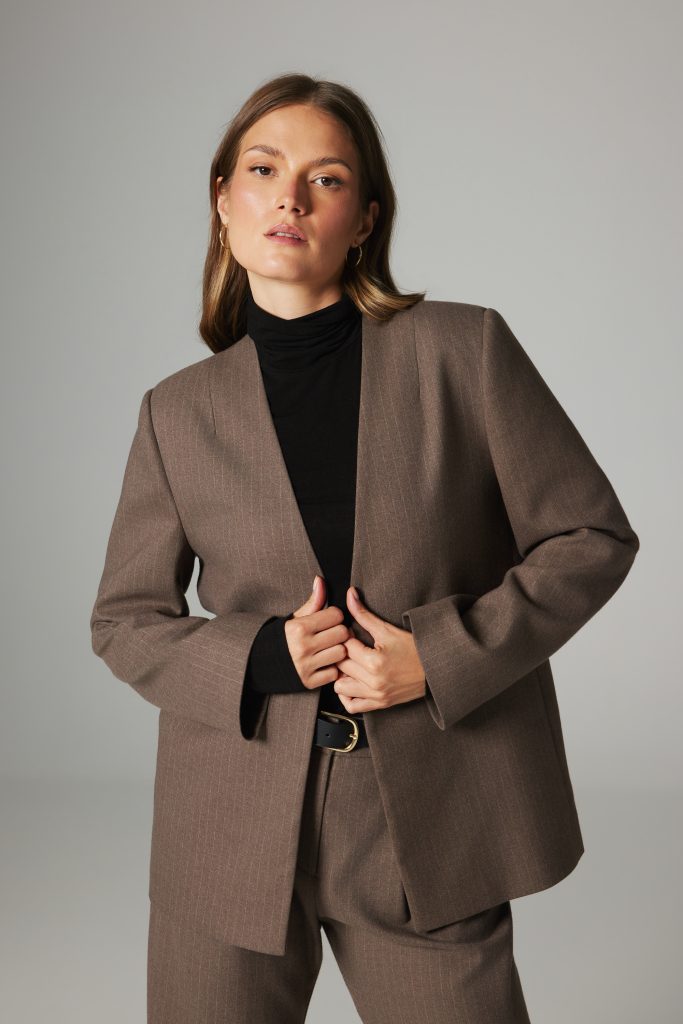
How to use a garment steamer on viscose
If the care label allows steaming, start with a suitable, gentle setting. Move the nozzle according to the steamer’s instructions, avoiding directing an intense stream of steam at one spot for too long.
The garment should be hung or supported appropriately, but do not stretch the fabric while it is hot and damp. Viscose may be more prone to distortion when wet.
After smoothing, leave the fabric to dry and cool completely before putting the garment on.
How do you iron a viscose shirt without creases or distortion?
Viscose shirts need a slightly different approach from simply cut skirts. In addition to large fabric panels, they have a collar, cuffs, button placket, and seams that can create extra bulk.
It is a good idea to start with the collar and sleeves, then move on to the front and back of the shirt. Do not press the iron directly onto buttons or set unwanted creases into the placket.
For example, the Mel shirt in olive heather is made from a blend of 86% viscose and 14% acrylic. The manufacturer recommends hand washing at 30°C and gentle ironing. In this case, it is especially important to take care of the entire blend rather than setting the temperature based only on its viscose content.
After ironing, it is best to leave the shirt hanging on a suitable hanger. The fabric should cool and dry completely before being put away in the closet.
How do you iron a viscose dress with gathers and draping?
Dresses with gathers are harder to iron than garments with simple, flat surfaces. Pressing the iron down carelessly can flatten decorative draping and change the way the fabric falls over the body.
That is why it is worth assessing the dress’s construction first. Large, smooth areas can be ironed according to the manufacturer’s instructions, while you should avoid pressing hard on gathered sections.
For example, the Nicole dress in marsala is made from a blend of 87% viscose, 10% polyester, and 3% elastane. The style features draping at the waist, and the manufacturer recommends ironing it inside out. With this design, it is important to preserve the decorative folds and avoid flattening them.
If the care instructions allow the use of a steamer, it can help smooth loose sections of the dress without disrupting its construction. Take care around areas with lots of gathers so the fabric does not get stretched.
With women’s dresses in more complex styles, remember that the goal of garment care is not always to achieve a perfectly flat surface. Some pleats and gathers are intentionally designed as part of the cut.
How do you iron viscose trousers so they keep their shape?
Viscose trousers may need particular attention around the knees, hips, and waistband. Creases can form there while sitting, and they do not always disappear just by hanging the garment up.
First, align the legs along the seams and check whether the style needs a defined crease. Do not iron in random folds, as they can spoil the line of wide-leg or straight trousers.
For example, the Marisa trousers in olive are made from a blend of 92% viscose and 8% polyester. Flawless recommends gentle ironing inside out. This method helps limit the iron’s direct effect on the visible surface of the fabric.
With pleated trousers, take care not to flatten the areas where the pleats should create natural volume. Wide, fluid legs, on the other hand, do not always need a sharp crease.
After smoothing, it is best to leave the trousers laid flat or hanging on a suitable hanger to prevent new creases forming before you put them on.
How do you remove shiny marks left by ironing viscose?
Shiny marks can appear when the iron presses too hard on the fabric or exposes it to excessive heat. They are especially noticeable on dark, smooth fabrics because the way the surface reflects light changes.
Not every mark like this can be removed. If the fibers or fabric finish have been permanently damaged, home remedies may not work.
If the shine is slight, first leave the garment to cool completely and check the surface in natural light. Do not iron the same area again at an increasingly higher temperature.
In some cases, steam may improve the appearance of creased fibers, but only if the care instructions allow it. If the mark is caused by heat damage, applying more heat could make the problem worse.
Prevention is still the most effective approach. Ironing inside out, using the right temperature and a pressing cloth, and limiting pressure all reduce the risk of unwanted marks.
What should you do if the iron leaves a dark or yellow mark?
If the fabric becomes discolored, stop ironing. Do not try to remove the stain by heating the fabric further.
A dark or yellowish mark may indicate scorching, dye damage, or residue transferred from the iron’s soleplate.
What to do depends on the cause. For delicate or expensive garments, consider consulting a professional cleaner. Permanent heat damage cannot always be reversed.
Does viscose shrink after washing, and can ironing restore its shape?
Viscose can change size when it comes into contact with water, especially if it is washed or dried contrary to the manufacturer’s instructions. Some fabrics become more compact and stiff after drying, and gentle ironing or steaming may help restore their softness and natural drape.
However, this does not mean that every case of shrinkage can be fixed with an iron. If the fabric has become permanently misshapen or damaged, ironing may not restore its original dimensions.
It is important to distinguish temporary shrinkage and stiffness from a permanent change to the garment’s construction. With delicate fibers, do not try to restore the garment’s length by pulling the fabric hard while ironing.
If the garment has changed size after washing, check the care label again and see whether the manufacturer allows damp ironing or steaming. With fiber blends in particular, follow the instructions for the finished product.
How can you prevent creases in a satin skirt while wearing it?
Ironing removes some creases, but it cannot stop them from forming again while you sit, walk, or store the garment. With lightweight, fluid fabrics, the right fit and the way the material falls are important.
If the skirt is too tight around the hips, the fabric may pull and create more visible folds. Too much fabric around the waistband, on the other hand, can cause unwanted gathering.
Storage matters too. Do not cram a smooth satin skirt between heavy garments. Hanging it properly or folding it in a way that suits the fabric can help prevent deep creases.
Smoothing the fabric is one thing; choosing an outfit is another. If you want an elegant look, it is also worth knowing how to wear a satin midi skirt every day, to work, and in the evening. Proper ironing helps preserve the fabric’s appearance, while pairing it with the right shirt, sweater, or blazer gives the whole outfit the desired character.
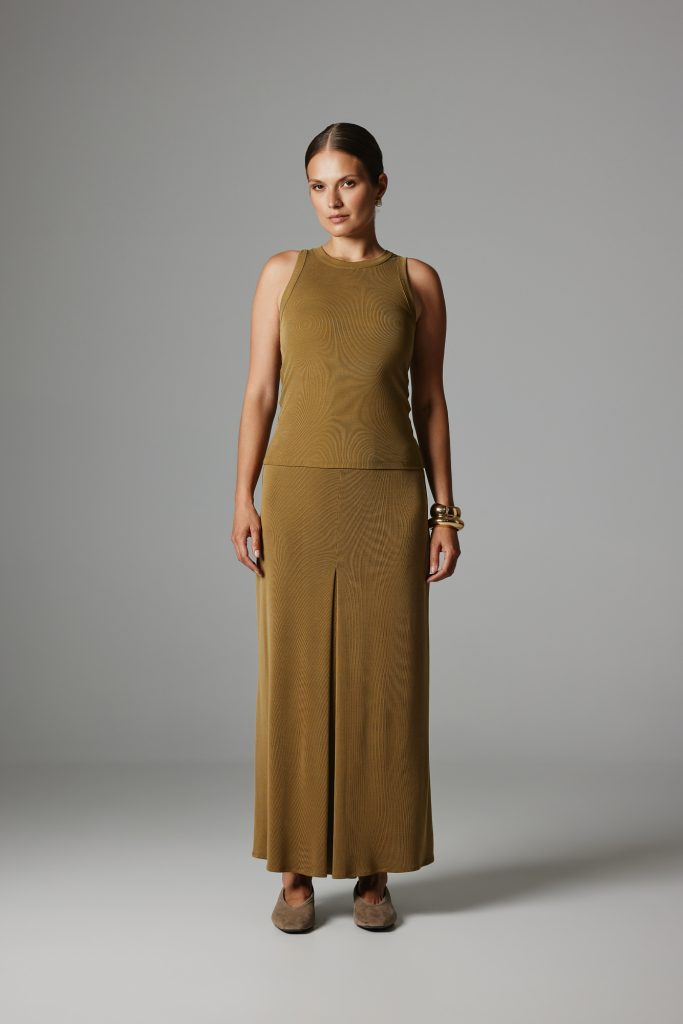
Does ironing help when a satin skirt develops static and clings to tights?
Do not treat ironing as the primary way to eliminate static. Creases and static electricity are two different problems, even though they can occur at the same time.
If the skirt is creased, smoothing it properly can restore its attractive line. But if the fabric clings to your tights, the cause may be friction, the type of fibers, or low humidity.
In this case, you need a solution suited to static electricity rather than turning up the iron. Our guide explains in detail what to do when a skirt or dress develops static and clings to your tights.
Separating these issues is especially important with satin and viscose. Unnecessary ironing can increase the risk of damaging the fabric without addressing the actual reason it clings to your legs.
How should you store viscose and satin clothes to keep them from creasing?
Proper storage helps reduce the need for frequent ironing. The most important things are not to overcrowd your clothes and to choose a storage method suited to their weight and construction.
Lightweight viscose shirts are often best stored on suitably wide hangers that support the shoulders. Garments should be completely dry and have enough space in the closet.
Long skirts can be hung in a way that does not stretch the waistband or create sharp folds. If the fabric is very soft and prone to distortion, choose a storage method that suits the garment’s construction.
For dresses with gathers, make sure the decorative details are not constantly being crushed by other clothes.
When traveling, it is a good idea to fold the fabric carefully without creating lots of tight creases. Once you arrive, take the garment out of your suitcase and hang it up rather than leaving it packed for several days.
Similar care is needed for related fabrics such as modal, but they should not be treated as identical fibers. Our guide explains the differences in what modal is, what its properties are, and how to care for it.
The most common mistakes when ironing viscose and satin
One of the most common mistakes is choosing a temperature based only on the fabric’s name without checking the care label. Viscose can be blended with polyester, elastane, and other fibers, while satin can have a wide range of compositions.
Another issue is ironing on the right side, especially when the fabric is dark and smooth. Direct contact with the hot soleplate can cause unwanted shine.
Pressing the iron down hard can also be risky. Delicate fabric should not be treated like thick cotton or linen, as it may react differently to heat and pressure.
Using a steamer without checking whether the manufacturer allows steam is another mistake. Hot steam and moisture can affect delicate finishes, so they require the same care as a regular iron.
It is also best not to fold garments immediately after ironing. The fabric should cool and dry completely to avoid setting new creases.
FAQ – Frequently asked questions about ironing viscose and satin
Can you iron viscose?
Yes, if the garment’s manufacturer allows it. Gentle ironing at a low temperature, inside out, is usually recommended. It is also a good idea to use a pressing cloth, especially with dark, smooth fabrics.
What temperature should you iron viscose at?
Many viscose garments can be ironed at a low temperature, for example with a one-dot setting, which corresponds to a maximum of 110°C. This is not a universal temperature, however. Always check the care label for the specific item.
Can you use a steamer on viscose?
Yes, if the care instructions allow the use of steam. A steamer can help remove creases without pressing the iron directly against the fabric, but use it carefully and avoid stretching the damp material.
Can you iron satin?
Yes, but only if the manufacturer allows ironing. Check which fibers the satin is made from, because silk, viscose, and polyester satin may need different temperatures.
How do you iron a satin skirt?
Start by checking the care label. If ironing is allowed, it is usually a good idea to turn the skirt inside out, use a suitably low temperature, and protect the visible surface from direct pressure from the iron.
Why does viscose become shiny after ironing?
Shine can be caused by too much pressure, excessive heat, or a change to the surface texture. It is especially visible on dark fabrics. That is why it is a good idea to iron inside out and use a pressing cloth.
Can you iron wet viscose?
Some viscose fabrics are easier to smooth when slightly damp, but do not iron a very wet garment unless the manufacturer clearly recommends it. Fabrics prone to distortion and water marks require particular care.
Is it better to iron or steam a satin skirt?
It depends on the fabric’s composition, finish, and care instructions. A steamer can make it easier to smooth relaxed styles, while an iron gives you more control over pronounced creases. Do not use either method if the manufacturer advises against it.
How can you remove creases from a dress without an iron?
If the manufacturer allows steaming, you can use a suitable steamer. Carefully hanging the garment may also help with minor creases. However, do not spray random fabrics with water or use intense steam without checking the care instructions.
Can ironing restore the size of shrunken viscose?
In some cases, gentle ironing or steaming may help restore softness and improve the way the fabric drapes after washing. However, this does not mean that every permanent change in size can be reversed.
Do you need to iron viscose after every wash?
Not always. If the garment has dried properly and has no obvious creases, ironing may be unnecessary. Much depends on the type of fabric, its construction, and how it was dried.
Are satin and viscose the same material?
No. Viscose is a type of fiber, while satin refers to a characteristic weave. Satin can be made from viscose, silk, polyester, or other fibers. That is why you need to choose an ironing method based on the product’s full composition.
How can you safely iron viscose and satin so your clothes keep their elegant appearance?
Ironing viscose and satin properly is mainly about adjusting the temperature and smoothing method to suit the specific fabric. The most important things are to check the care label, avoid excessive pressure, and protect the visible surface from an iron that is too hot.
In many cases, a good option is to iron inside out at a low temperature using a pressing cloth. For styles with gathers and delicate seams, a steamer can also help, but only if the manufacturer allows it.
Remember that viscose garments do not all have identical properties, and satin can be made from a wide range of fibers. That is why a universal iron setting is no substitute for the care instructions.
The best results come from gentle smoothing that removes creases without changing the fabric’s natural texture. This helps satin skirts, viscose dresses, shirts, and trousers retain their softness, shape, and elegant drape for seasons to come.